Your partner in material protection

Bacteria vs Fungi : What’s the difference ?

In the world of microbial control, not all threats are created equal — and choosing the right biocide starts with understanding who you’re fighting.

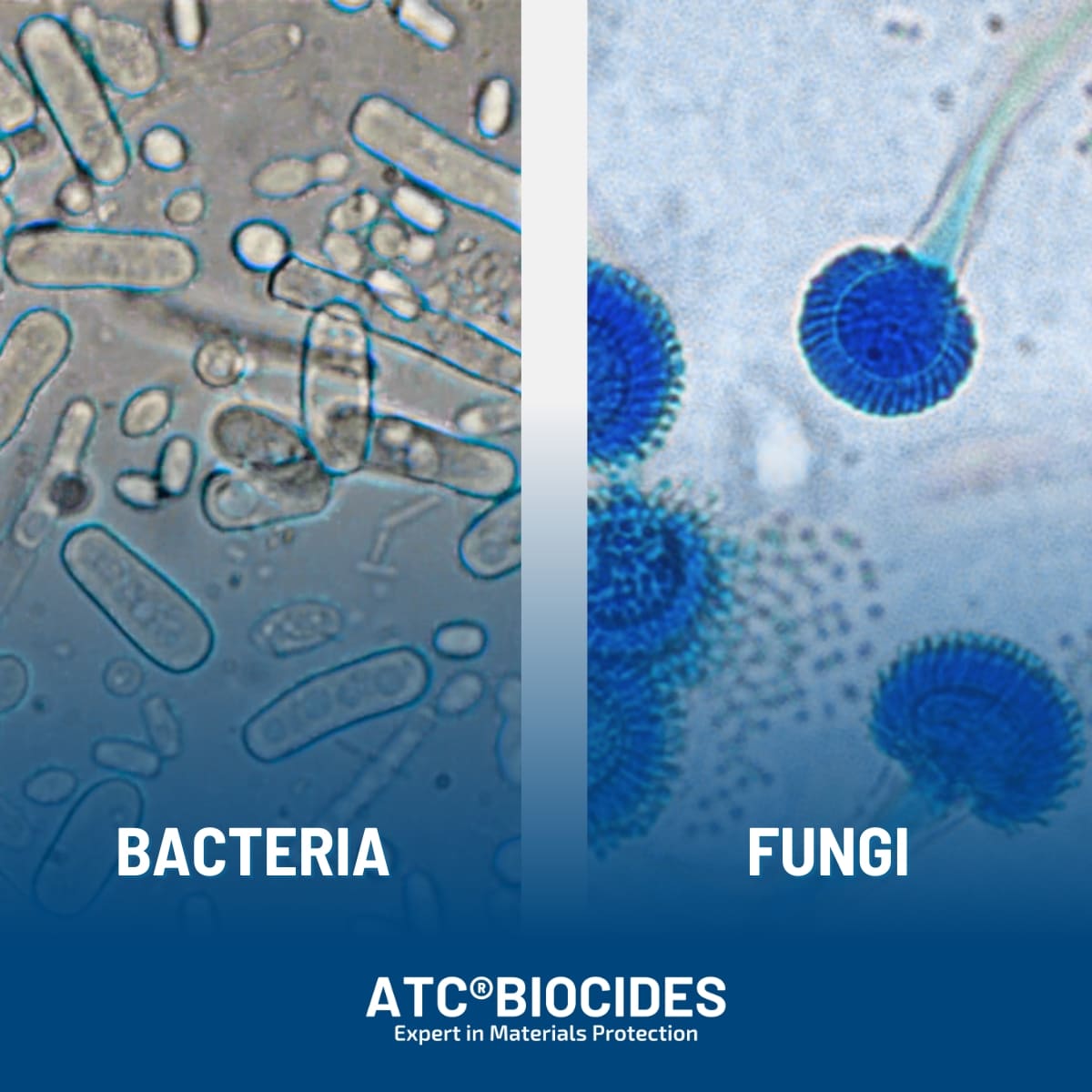
Bacteria

Bacteria are single-celled prokaryotes. They have no nucleus, reproduce rapidly (doubling in as little as 20 minutes), and can form biofilms that make them extremely hard to eradicate.

Fungi

Fungi — including molds and yeasts — are eukaryotes with a true nucleus and a complex cell wall rich in chitin. They grow more slowly, but their spores are highly resistant and can spread through air, surfaces, and materials.

Why does it matter for biocide selection ?

  • Bacterial cell membranes and metabolic pathways are very different from fungal cell walls.


  • A biocide effective against bacteria may show limited activity against fungi — and vice versa.


  • Broad-spectrum formulations are often needed to address mixed contaminations.


At ATC Biocides, we help our customers identify the right active substances and formulations to protect their products and processes — whether the threat is bacterial, fungal, or both.

Understanding your microbial enemy is the first step to effective protection.